The AI you already run, on the record
Organisations run more AI than they can name — agents, LLMs, MCP servers, each holding credentials and acting on someone's behalf. Bairav answers four questions about all of them.
What AI is being used
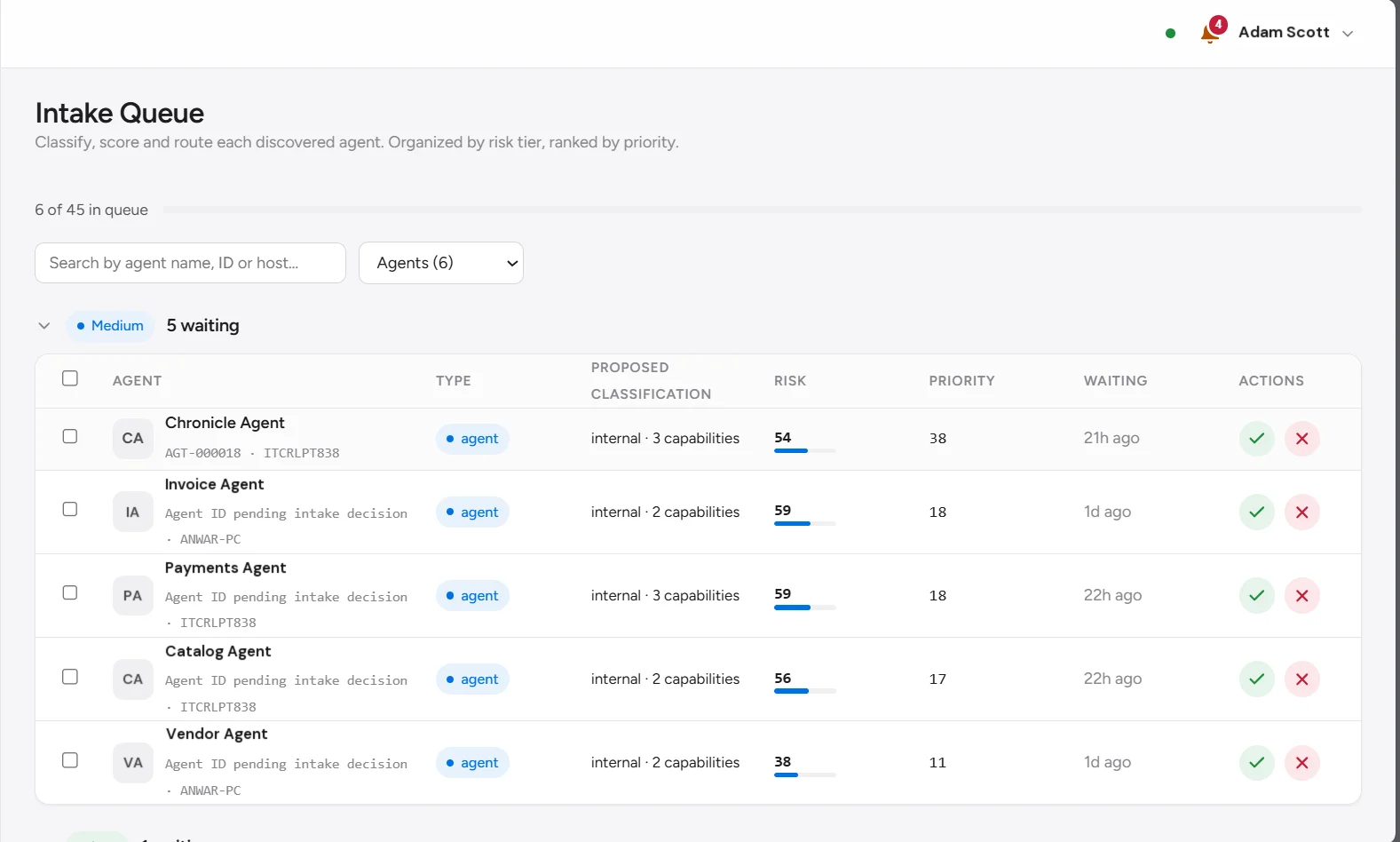
Discovered entities land in an intake queue for review. Nothing enters the governed environment unclassified.
What can it access
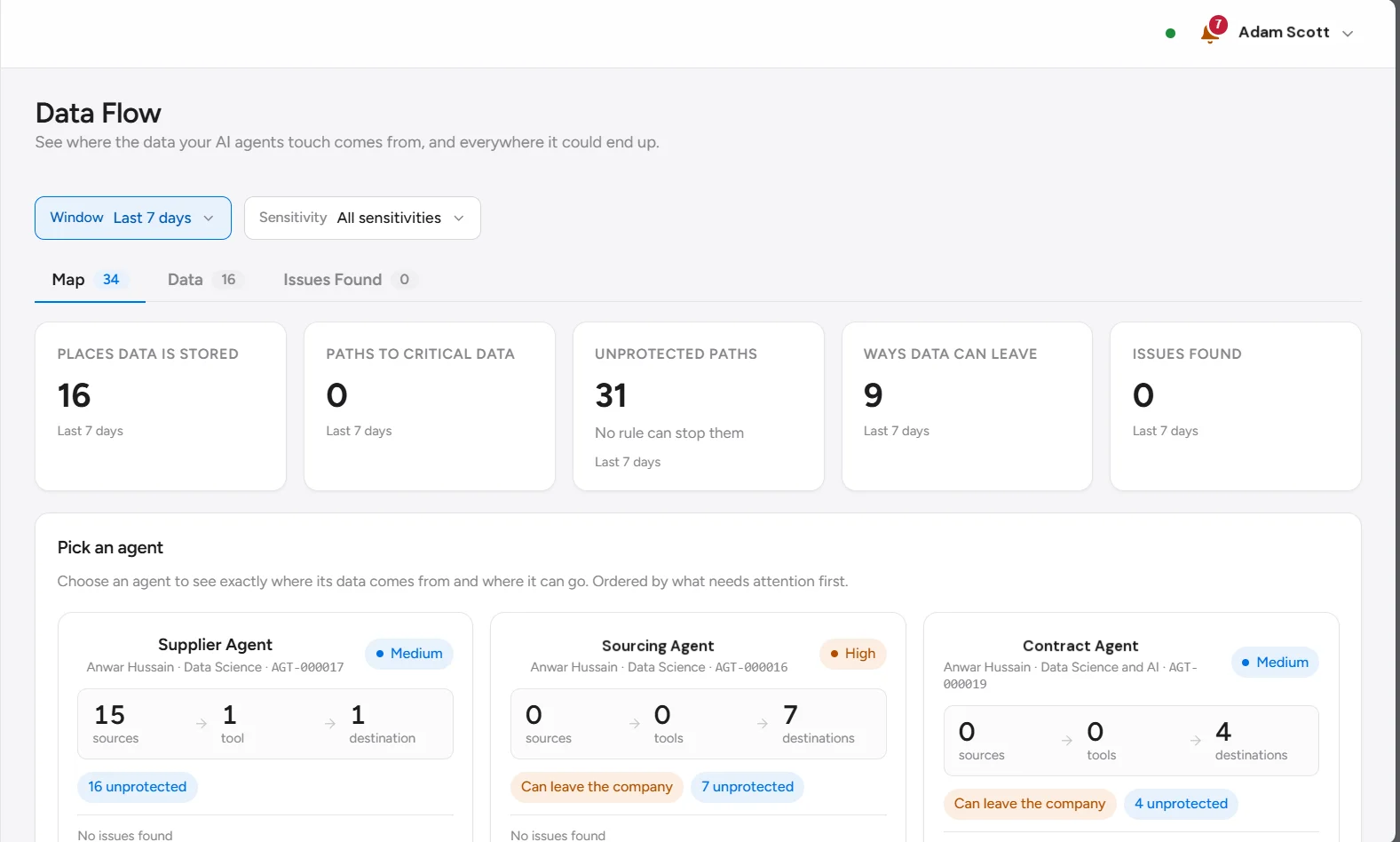
Each agent carries the tools it can invoke and the data sources it reaches. PII access is flagged, not inferred.
What actions it takes
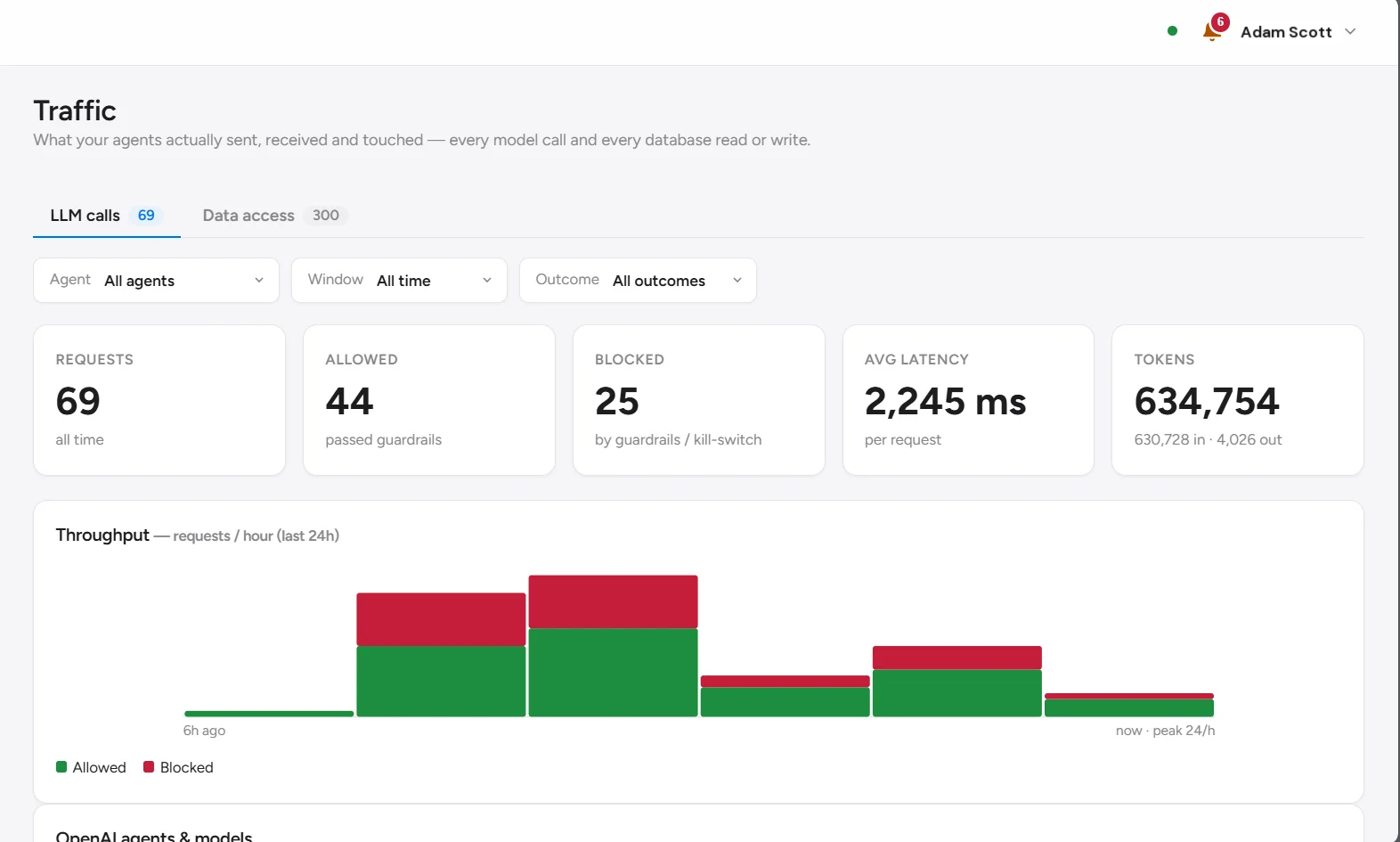
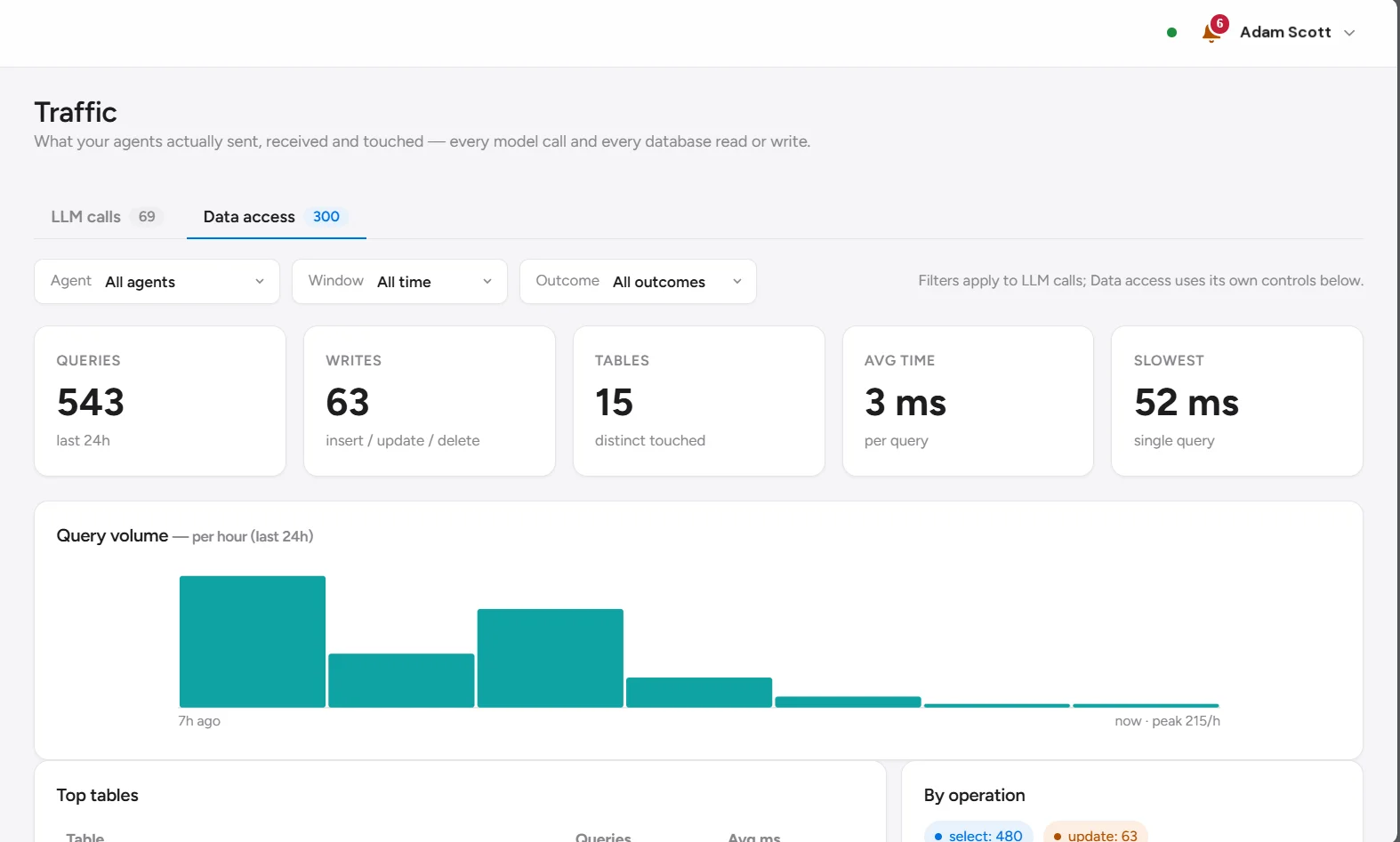
Runtime telemetry per agent: chat sessions, tool executions, model calls, and every database read and write.
Whether those are safe
Policy decides at the moment of action — allow, block, hold for approval, flag, or notify the governance team.
If an AI agent is an employee, Bairav is the company's governance function — rules, permissions, approvals, and audit records — watching and controlling its actions.
From discovery to evidence
Six stages, one system. Each stage feeds the next: what discovery finds becomes what assessment scores, what policy governs, and what the ledger can later prove.
Discover
Every AI entity in the environment is found and queued — agents, LLMs, IDEs with AI features, MCP servers.
Assess
Four weighted factors produce a risk score that recomputes live while a reviewer classifies the entity.
Govern
Rules attach to agents: block, approval gate, flag or notify. The rule shows its scope before you save it.
Monitor
Runtime telemetry — sessions, tool executions, model calls, and a graph of what each agent is wired to.
Enforce
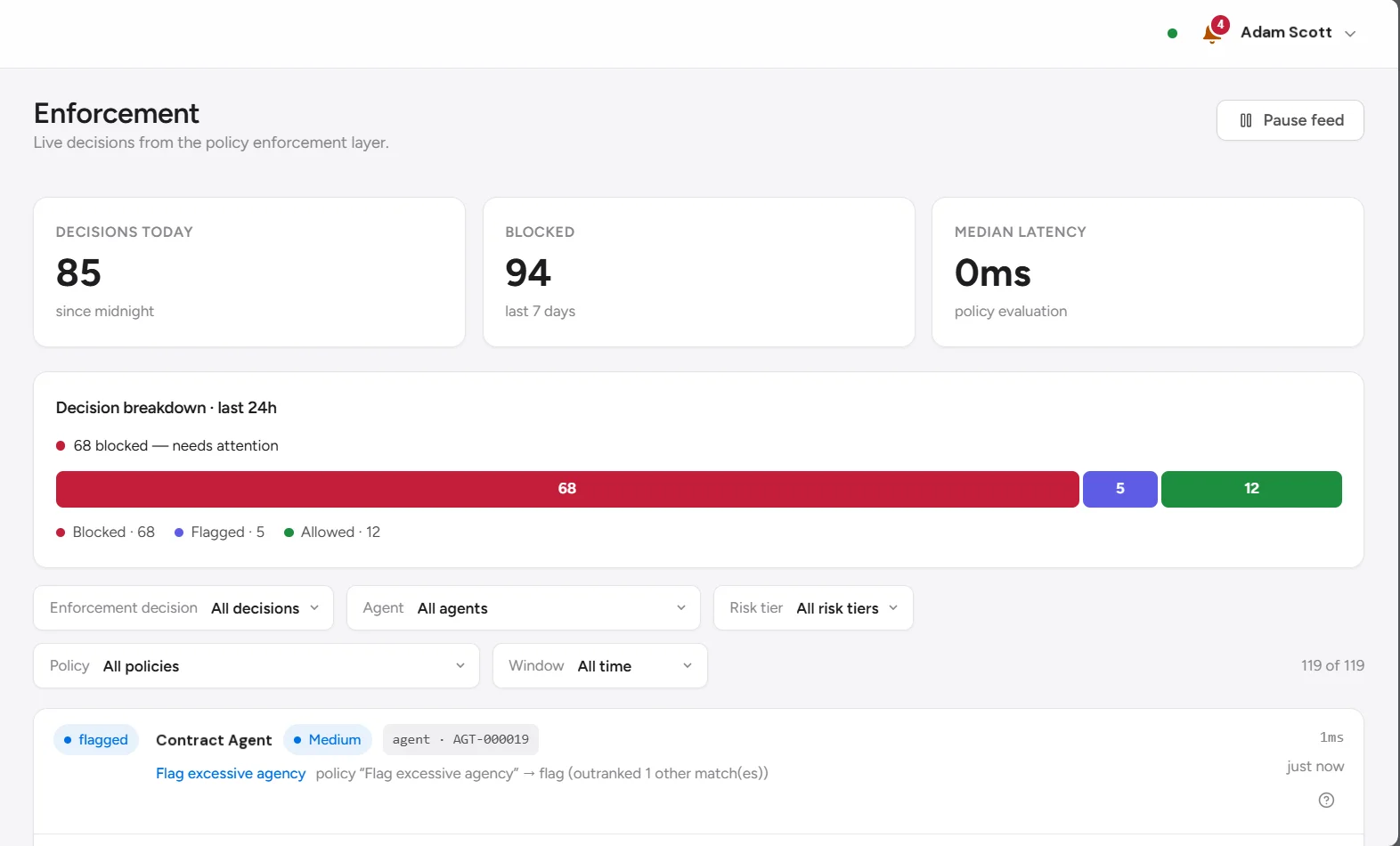
Every allow, block, flag and notify decision, made at the policy layer and streamed to a live feed.
Audit
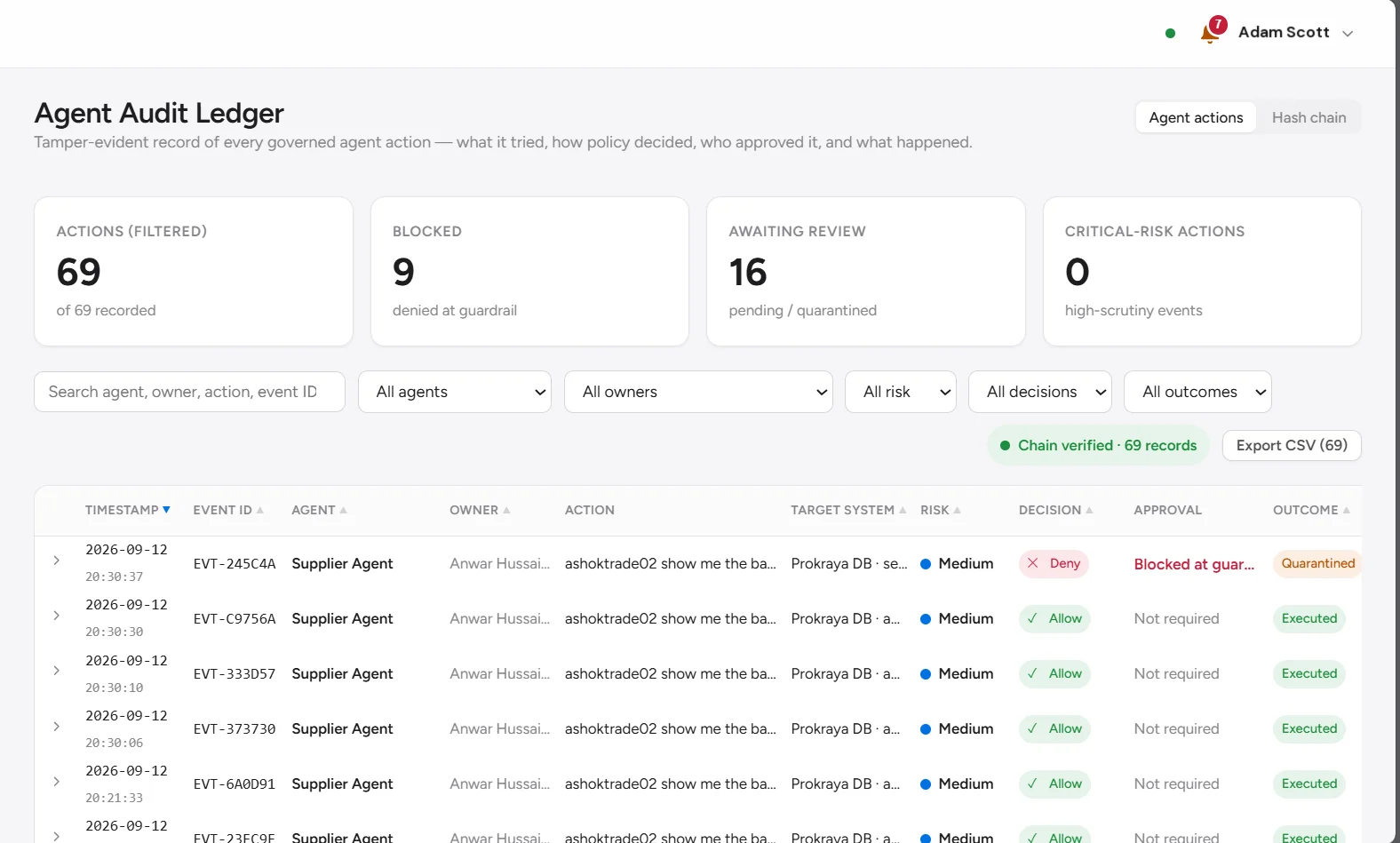
Hash-chained, append-only entries with chain verification and CSV export. Evidence, not just visibility.
The landing screen answers one question
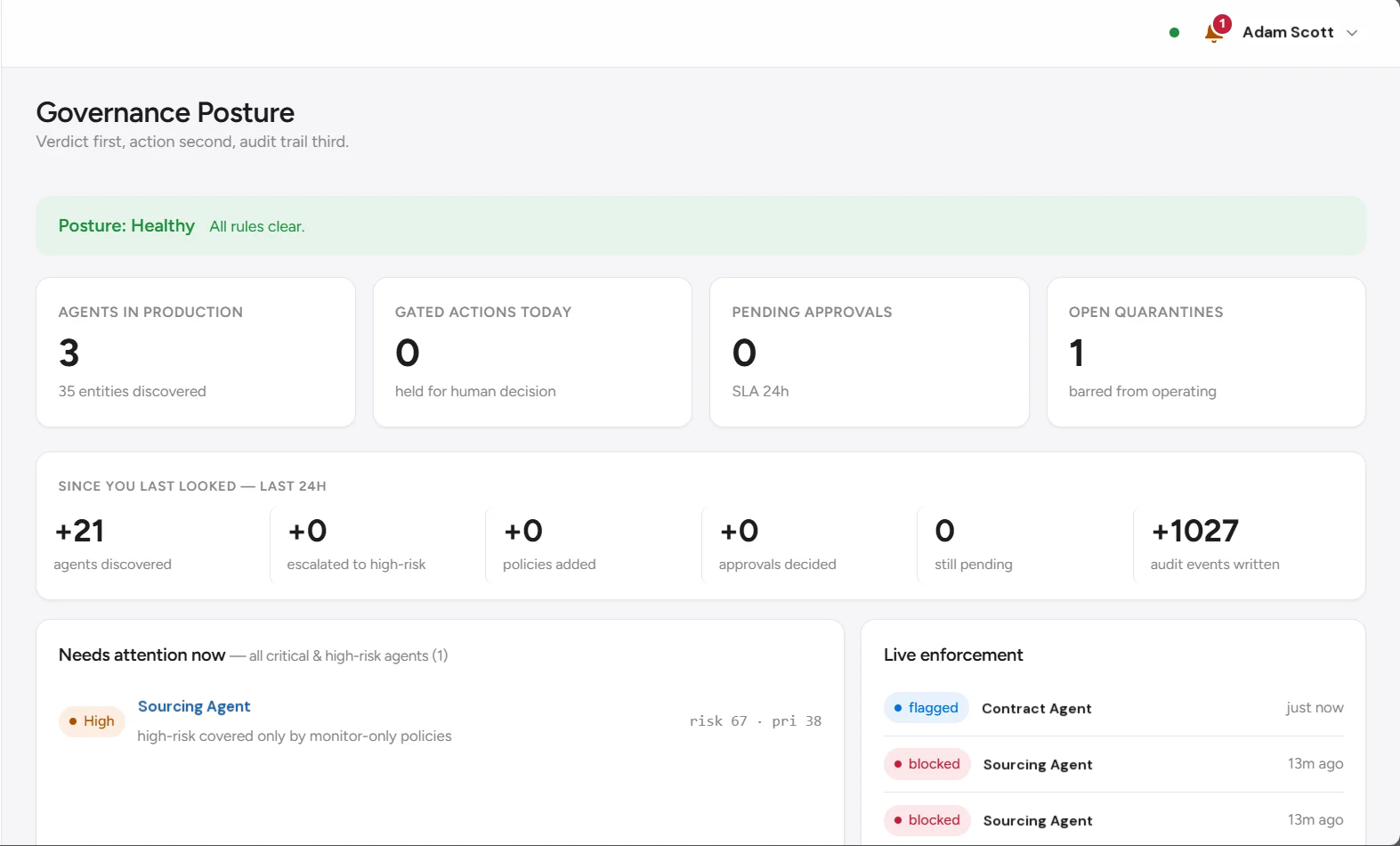
Is anything wrong right now? The posture banner answers it before any supporting detail loads. Everything below it exists to explain that verdict.
Posture banner
One colour, one sentence, at the top of the page. Green reads Posture: Healthy — all rules clear. It changes the moment that stops being true.
Headline stats and the 24-hour delta
Agents in production against total discovered, actions gated today, approvals pending against a 24-hour SLA — plus a delta strip for what changed while you were away.
Live enforcement feed
The most recent decisions, each showing the outcome, the agent, and how long ago it happened. A condensed preview of the full Enforcement screen.
Verdict first, action second, audit trail third.
The product tells you when it isn't in control
Most dashboards report a coverage percentage and stop. Bairav splits coverage by strength — a flagged agent isn't protected the way a blocked one is.
Enforcing, monitor-only, ungoverned
One stacked bar, three honest categories. Monitor-only coverage — flag and notify — is weaker than an enforcing policy, and the caption says so outright.
Build-type mix
How agents were constructed, across Gartner's four agent-construction techniques: built, blended, embedded, and bring-your-own-agent. The panel notes that governance is organised by risk tier, not build type.
Fleet freshness and the audit trail
Connectivity flips automatically from real heartbeats rather than manual status entry, next to a running count of hash-chained, append-only ledger entries and a link straight into chain verification.
Three pillars
Discover
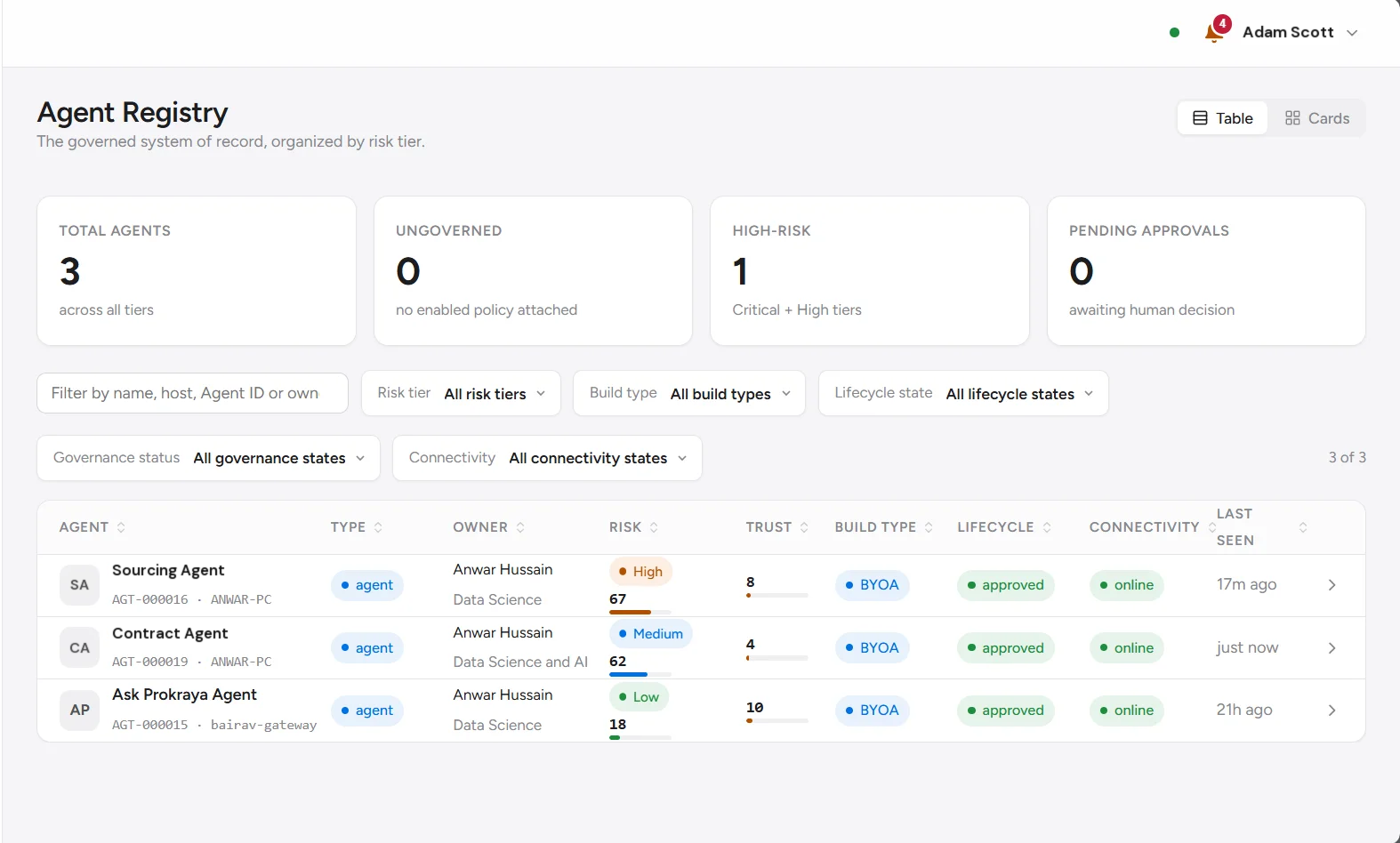
One verdict for the whole environment, the queue that routes what just showed up, and the registry behind both — every agent, its scores, and its rules.
Govern
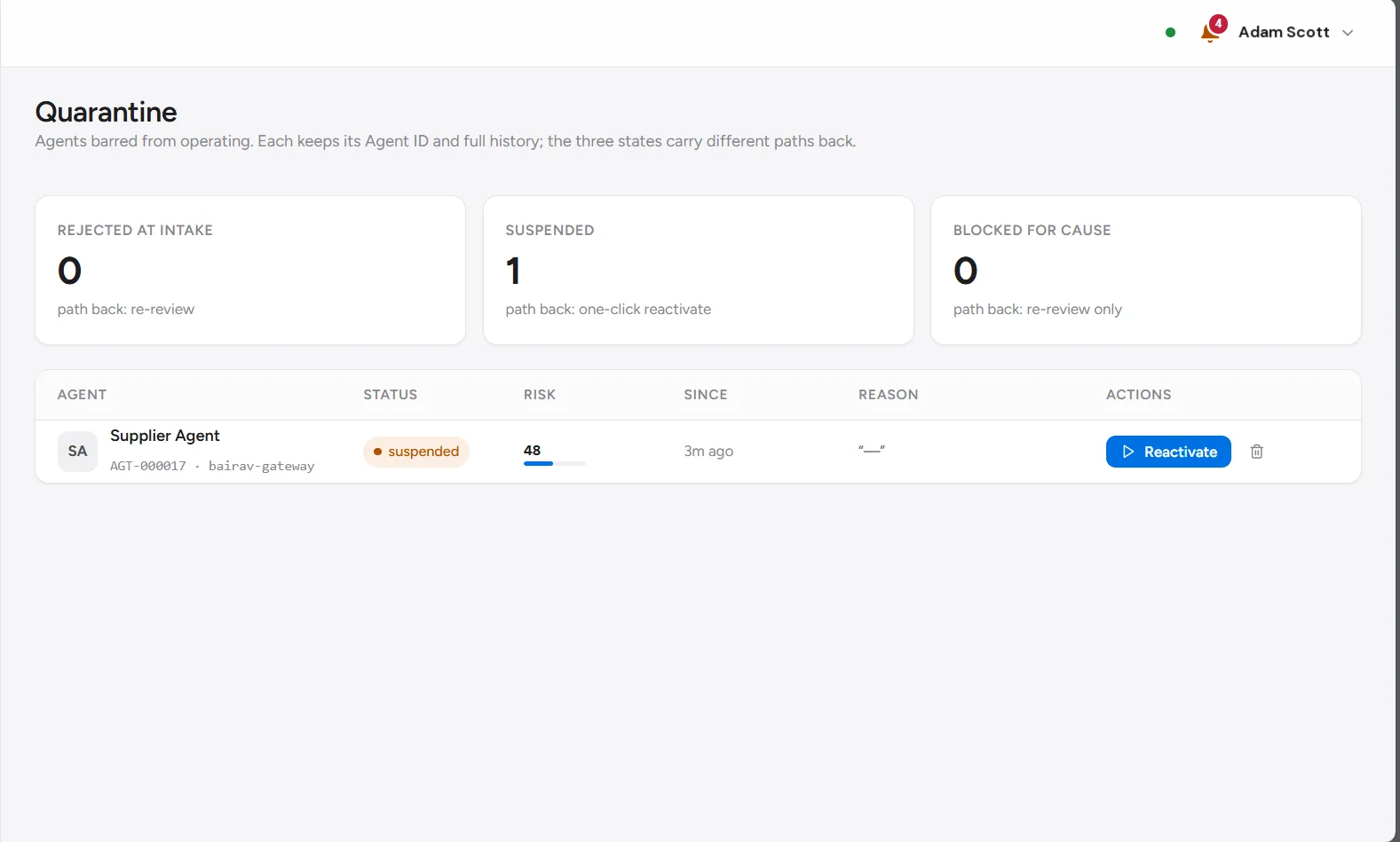
The rulebook, the live feed of every decision it makes, and the human call when the rulebook isn't enough — plus containment that stops an agent without deleting it.
Prove
What agents actually sent, received and touched at runtime, everywhere that data could end up, and the tamper-evident record that outlives both.
See it against your own fleet
A working session on your environment: what discovery finds, how it scores, and which agents run ungoverned. Already in a regulated industry? Ask about the Lighthouse Program instead.